
The Rise of Non-State Actors in Igboland: A Failure of Governance & Effective Representation

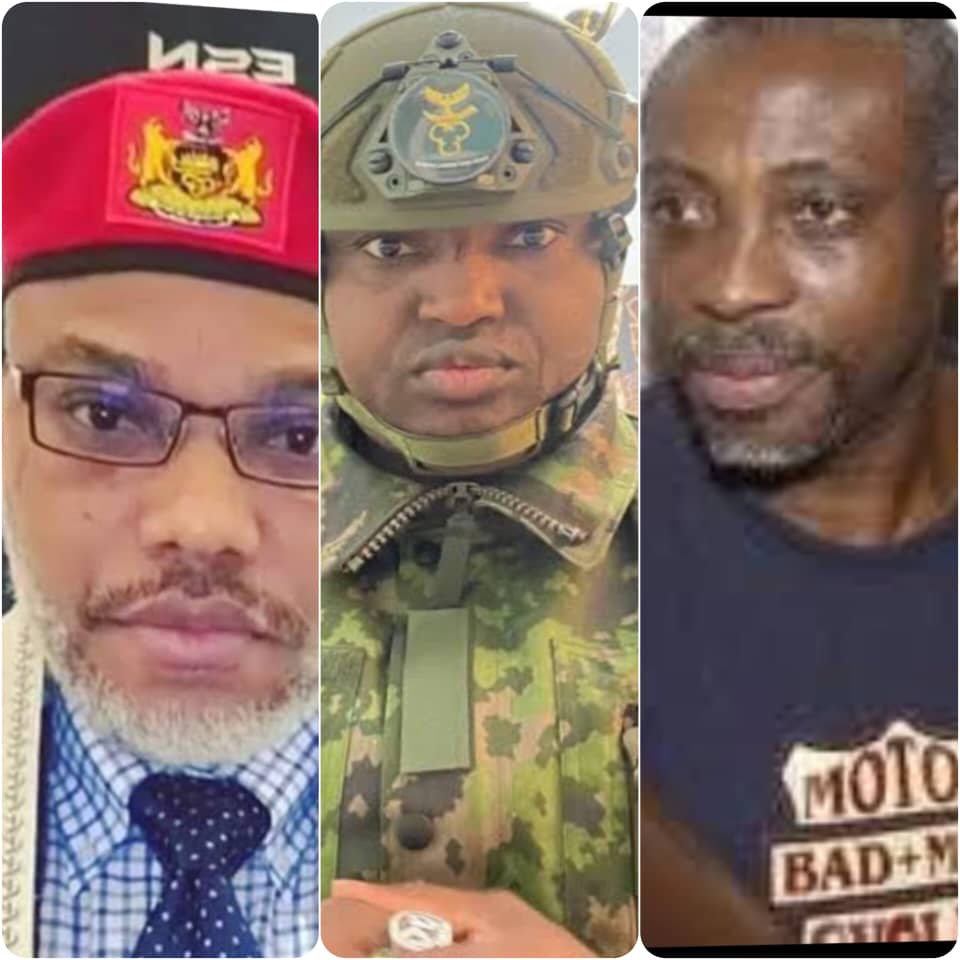
By Ik Ogbonna -In the heart of Nigeria’s Southeast region, known as Igbo land, a wave of separatist movements has gained momentum over the past two decades. Mystery figures like Ralph Uwazuruike, Nnamdi Kanu, and Simon Ekpa have emerged as prominent non-state actors, championing the revival of Biafran independence. Unfortunately, these are men without credible track records and antecedents but yet gain attention and followership. Their ascent is not merely a product of ethnic nationalism but a direct response to the chronic failures of the Nigerian state and its elected representatives.
Igbo land, mainly encompasses states like Anambra, Enugu, Imo, Abia, and Ebonyi and parts has long grappled with marginalization, insecurity, and economic neglect—issues that have eroded trust in formal governance and fueled grassroots agitation. These self proclaimed activists rose to prominence by situating their movements within the broader context of state dysfunction and poor performance of state governments and representatives in the South East region and federal neglect and discrimination.
Post-Civil War Grievances and the Seeds of Discontent
The story begins with the Nigerian Civil War (1967-1970), when the Igbo-led Republic of Biafra attempted secession amid ethnic tensions and political instability. The war ended in defeat for Biafra, resulting in over a million deaths and widespread devastation. In the aftermath, Igbo communities faced systemic discrimination, including limited access to federal resources, political appointments, and economic opportunities. Successive Nigerian governments promised “reconciliation, rehabilitation, and reconstruction” but these pledges largely went unfulfilled, leaving Igbo land underdeveloped compared to other regions except for individual and community development efforts.
This historical marginalization created a fertile ground for resentment. Elected representatives from Igbo land, often aligned with national parties like the People’s Democratic Party (PDP) or All Progressives Congress (APC), have been criticized for prioritizing personal gains over regional advocacy. For instance, infrastructure deficits—poor roads, unreliable electricity, and inadequate healthcare—persist despite federal allocations, highlighting a failure in accountability and representation. At the lawmaking chambers, our representatives were afraid of speaking their minds, except for a few like Senators Uche Chukwumerije, Orji Uzor Kalu, Osita Ngwu, Enyinnaya Abaribe; Rep. Uche Onyeagucha etc. Insecurity, exacerbated by herdsmen-farmer clashes and banditry, has further exposed the state’s inability to protect citizens, leading many Igbos to view the federal government as indifferent or hostile.
Ralph Uwazuruike and the Birth of MASSOB:
Ralph Uwazuruike, a self proclaimed activist, founded the Movement for the Actualization of the Sovereign State of Biafra (MASSOB) on September 13, 1999, shortly after Nigeria’s return to democracy under President Olusegun Obasanjo. Uwazuruike’s motivation stemmed from the “travails of Ndigbo” post-civil war, including economic exclusion and political disenfranchisement. He argued that the Igbo people had been treated as second-class citizens for decades, with little federal investment in the Southeast despite its contributions to Nigeria’s economy through commerce and oil.
MASSOB positioned itself as a non-violent movement, drawing inspiration from global self-determination efforts like those in India and drawing on the Montevideo Convention protocols for statehood. Actions included calls for business shutdowns, international demonstrations, and establishing a diaspora radio station. However, the Nigerian government’s response was repressive: Uwazuruike was arrested in 2005 on treason charges and detained until 2007. His rise filled a void left by elected officials who performed poorly and failed to address grievances like unequal resource distribution, ethnic dominance by other groups, pushing ordinary Igbos toward separatist ideologies as a form of collective resistance.
Nnamdi Kanu and IPOB:
Building on MASSOB’s foundation, Nnamdi Kanu launched the Indigenous People of Biafra (IPOB) in 2012, leveraging social media and Radio Biafra to amplify calls for Biafran sovereignty. Kanu, a British-Nigerian activist, gained traction by highlighting government failures such as police brutality, economic disempowerment, and the marginalization of Igbos in national politics. His rhetoric resonated during events like the 2020 #EndSARS protests, where state violence against youth underscored broader systemic issues.
IPOB’s rise accelerated amid rising insecurity in Igboland, including attacks by Fulani herdsmen that the federal government appeared reluctant to curb especially under former President Buhari. Kanu formed the Eastern Security Network (ESN) in 2020 to counter these threats, positioning IPOB as a protector where the state had failed. The arming of non-state actors with weapons further exacerbated the insecurity in Igbo land. Elected representatives, including Southeast governors, were accused of complicity or inaction and poor performance, further eroding public faith in government, her functionaries and institutions. Kanu’s arrest in Kenya in 2021 and subsequent extradition to Nigeria sparked widespread protests and violence, illustrating how his movement had become a rallying point for frustrated youths. Critics argue that without addressing root causes like poor governance and ethnic inequalities, such movements will persist.
Simon Ekpa: Factionalism and the Diaspora Influence
Simon Ekpa, the incarcerated Finnish-Nigerian politician and athlete, emerged as a key figure in the Biafran movement following Kanu’s arrest. In July 2021, he was appointed lead broadcaster for Radio Biafra and quickly positioned himself as a hardliner, declaring himself Prime Minister of the Biafra Republic Government in Exile (BRGIE). Ekpa’s rise is tied to internal IPOB fractures and the vacuum created by Kanu’s incarceration, with some viewing him as a disciple continuing the struggle, while others, including IPOB loyalists, accuse him of being a government infiltrator to discredit the movement.
His enforcement of “sit-at-home” orders—weekly shutdowns in Igboland to protest Kanu’s detention—has led to economic paralysis and violence by “unknown gunmen,” worsening insecurity further. Ekpa’s actions highlight state failures: The Nigerian government’s inability to resolve Kanu’s case or provide security has allowed factional leaders like him to gain support from the diaspora, where Igbos abroad fund and amplify the cause.
Elected officials’ silence on these issues has only amplified perceptions of abandonment.
The Vacuum Created by State and Elected Failures
The emergence of Uwazuruike, Kanu, and Ekpa underscores a theory of relative deprivation: Prolonged exclusion from resources, opportunities, and security drives collective action. Nigeria’s federal structure, criticized for centralizing power and favoring certain regions, has left Igboland underserved. Elected representatives, often caught in partisan politics, fail to push for restructuring or true federalism, leading citizens to turn to non-state actors for advocacy and protection.
This dynamics has worsened insecurity, with sit-at-home enforcements causing economic losses and deaths, while the state’s repressive tactics—arrests and military operations—escalate tensions without addressing underlying grievances.
The result is a cycle where non-state actors gain legitimacy as defenders against a “failed state.”
Implications and the Path Forward
In Igboland today, the influence of these actors manifests in disrupted daily life, heightened violence, and a polarized society. While their movements have mobilized global attention to Igbo plight, they have also invited accusations of terrorism and internal divisions. For lasting peace, Nigeria must confront its failures through dialogue, equitable development and political inclusion. South East Governors must perform to the satisfaction of their people and her representatives should speak their minds. Without reform, the rise of such figures will continue to symbolize the gap between the state and its people.
In essence, the story of Uwazuruike, Kanu, and Ekpa in Igboland is a cautionary tale of how neglected regions breed alternative power structures when formal institutions falter. Would such figures without credible antecedents have emerged under a Sam Mbakwe era as Governor of old Imo State or under Michael Okpara as Premier of Eastern Region? Very doubtful.
Ik Ogbonna is a PR Practitioner and Journalist and writes from Owerri, Imo State.