
2027: Tinubu Still Has Strong Political Prospects in Osun After Adeleke’s Re-election, Says Orji Kalu

Former Abia State Governor and Senator representing Abia North, Orji Uzor Kalu, has dismissed suggestions that the outcome of the Osun governorship election represents a setback for President Bola Ahmed Tinubu, saying the President’s political prospects in the state remain “very bright” ahead of the 2027 presidential election.
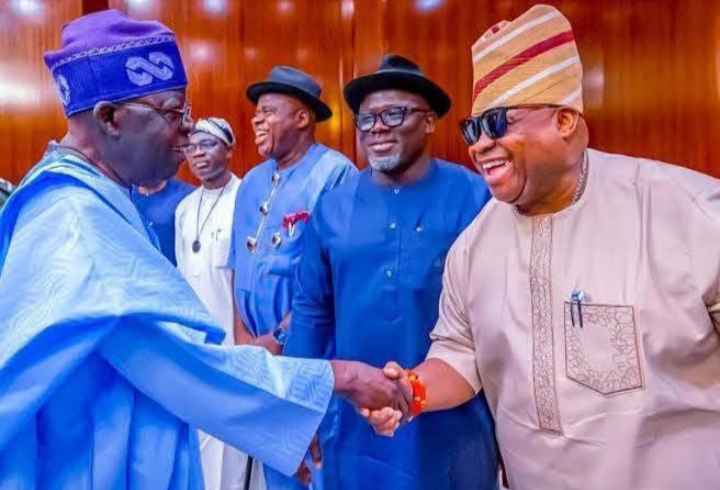
Kalu made the assessment in a statement issued by his media office on Sunday, following President Tinubu’s congratulatory message to Osun State Governor Ademola Adeleke on his re-election.
Adeleke, who contested on the platform of the Accord Party, secured another term in office after defeating the All Progressives Congress candidate, Munirudeen Bola Oyebamiji, in Saturday’s governorship election.
Kalu congratulated Adeleke on his victory while expressing sympathy to the APC leadership, its candidate and supporters over the result.
“I join President Bola Ahmed Tinubu in congratulating Governor Ademola Adeleke on his re-election as the Governor of Osun State. I also sympathise with the APC leadership, our party’s governorship candidate and all our supporters over the outcome of the election,” Kalu said.
He described the result as an expression of democratic choice, urging APC members and other political stakeholders to accept the verdict of the electorate and begin preparations for future contests.
“What happened in Osun is democracy in play. Elections are about the choice of the people, and as a party, we should be able to come back stronger,” he said.
Kalu also acknowledged the contribution of Gboyega Oyetola, the former Osun governor and current Minister of Marine and Blue Economy, to the development of the state.
Despite the APC’s defeat, however, Kalu argued that the result should not be interpreted as an indication that Tinubu has lost political ground in Osun ahead of 2027.
He said the President could still attract significant support across the state, including from politicians and supporters outside the APC.
According to Kalu, Tinubu’s prospects remain particularly strong among political stakeholders across party lines, including elements within the Accord Party that produced Adeleke.
The assertion comes against the backdrop of an unusual political alignment in Osun. Adeleke and the national leadership of the Accord Party had, weeks before the governorship election, adopted Tinubu as their preferred presidential candidate for the 2027 election.
The endorsement was publicly linked to the desire for continuity in federal infrastructure projects and closer cooperation between Osun State and the Federal Government.
Adeleke had also independently reaffirmed his support for Tinubu earlier in the year, describing the President as a leader whose continued administration would serve the interests of Osun and the wider Yoruba community.
That political positioning gives added context to Kalu’s argument. The APC’s defeat in the governorship contest does not necessarily translate into the rejection of Tinubu by the Osun electorate, particularly where the incumbent governor and his political platform have separately declared support for the President’s 2027 bid.
The 2026 Osun election was also shaped by a sharp contest between Adeleke’s incumbency and the APC’s effort to reclaim the state. Oyebamiji had repeatedly presented himself as Tinubu’s preferred candidate during the campaign, while the APC maintained that the President’s support was firmly behind its candidate.
Kalu’s position therefore draws a distinction between local electoral dynamics and the broader presidential contest. A governorship election, he suggested, should not automatically be read as a referendum on the President or his 2027 re-election prospects.
The former governor urged APC leaders and supporters to treat the Osun result as an opportunity for reflection and reorganisation rather than discouragement.
He also called on political actors to respect the democratic process, maintain peace and continue working towards national unity and development.
For Tinubu, the political significance of Osun extends beyond the immediate governorship contest. The state is strategically important in the South-West, while the President’s relationship with political actors across party lines has increasingly become a feature of the emerging 2027 political landscape.
Kalu’s assessment suggests that the APC may seek to separate its performance in the Osun governorship election from Tinubu’s presidential prospects, particularly as the 2027 race takes shape.
Whether that strategy translates into votes will ultimately depend on the strength of Tinubu’s alliances, the performance of his administration, the mobilisation capacity of the APC and the ability of opposition parties to present a compelling national alternative.
For now, Kalu’s message is clear: the loss of the Osun governorship seat is not, in his assessment, a loss of Osun for Tinubu in 2027.