
Beyond Revenue Figures: How Bashir Adewale Adeniyi Is Redefining the Nigeria Customs Service

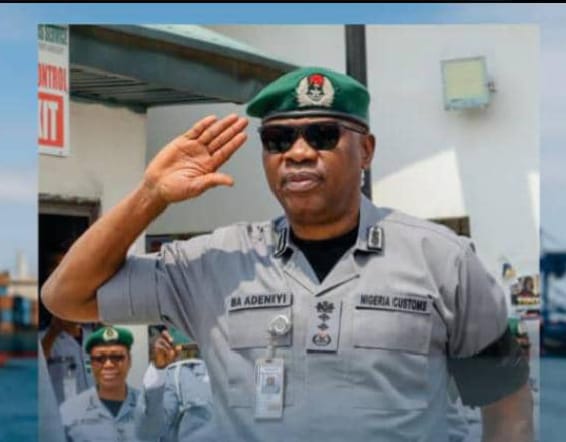
By Adisa Olamilekan. In the complex architecture of Nigeria’s public institutions, leadership often determines whether an agency becomes a catalyst for national development or remains trapped in bureaucracy. The story of Comptroller-General of Customs Bashir Adewale Adeniyi is therefore not merely about revenue collection; it is about the difficult task of institutional transformation in a country where public trust in government agencies is frequently tested.
When Adeniyi assumed office as the 15th substantive Comptroller-General of the Nigeria Customs Service in June 2023, expectations were high. Customs had long been viewed through the narrow lenses of revenue generation, border enforcement, and periodic controversies. The challenge before him was not simply to improve performance indicators but to redefine the identity of the Service itself.
Nearly three years later, the debate surrounding his tenure reveals a leader whose impact extends beyond statistics. While supporters celebrate unprecedented revenue collections and modernization efforts, critics argue that the true test of reform lies in whether these gains can outlive the individual driving them.
Born in Katsina State and armed with academic training in International Relations and Strategic Studies, Adeniyi entered office with a rare combination of intellectual depth and practical experience. Having spent over three decades within the Customs system, he understood both the strengths and weaknesses of the institution he was tasked with leading.
One of the defining characteristics of his administration has been a deliberate shift in narrative. Rather than portraying Customs solely as a law enforcement agency, he advanced the idea that it should function as a facilitator of trade and economic growth. This seemingly simple change in perspective has carried profound implications for policy and operations.
For years, many businesses viewed Customs as a bottleneck in the supply chain. Delays, procedural complexities, and administrative inefficiencies often translated into higher costs for importers and exporters. Adeniyi’s reforms sought to address this perception by placing trade facilitation at the center of Customs operations.
Perhaps the most visible achievement of his administration has been the remarkable growth in revenue generation. At a time when government finances faced significant pressure from economic volatility, Customs consistently recorded impressive collections, surpassing expectations and strengthening federal revenue streams.
Yet revenue alone does not tell the full story. A critical question remains: Were these gains achieved through sustainable reforms or temporary enforcement measures? Evidence suggests that much of the increase resulted from improved compliance, enhanced intelligence gathering, and the closure of longstanding loopholes that had previously undermined collections.
Technology has emerged as the backbone of Adeniyi’s modernization agenda. His administration accelerated the deployment of digital systems aimed at reducing manual processes and increasing transparency across Customs operations.
The rollout of the B’Odogwu Trade Portal and related automation initiatives represented a significant departure from traditional methods. By reducing opportunities for human discretion, these systems addressed one of the most persistent concerns among stakeholders—the risk of inefficiency and opacity in cargo clearance procedures.
However, digital transformation is never without challenges. While automation promises efficiency, its success depends on consistent implementation, user adaptation, and supporting infrastructure. The long-term effectiveness of these initiatives will depend on whether future administrations maintain the same commitment to technological innovation.
Border security has been another major area of focus. Under Adeniyi’s leadership, anti-smuggling operations evolved from routine enforcement exercises into intelligence-driven interventions. This approach has produced notable seizures of arms, narcotics, counterfeit goods, and other prohibited items.
The significance of these seizures goes beyond enforcement statistics. They represent efforts to protect local industries, preserve public safety, and defend legitimate businesses from unfair competition. In a developing economy struggling to strengthen domestic production, such interventions carry strategic economic value.
Adeniyi’s tenure has also been marked by an unusual emphasis on stakeholder engagement. Through regular consultations with freight forwarders, manufacturers, importers, exporters, and industry associations, he sought to create a more collaborative relationship between Customs and the trading community.
This approach has helped reduce tensions that historically characterized interactions between Customs officials and business operators. By opening channels of communication, the Service became more responsive to operational concerns and policy feedback.
Internally, the Customs boss has invested heavily in human capital development. Training programs, professional certification opportunities, and international exposure have strengthened the capacity of officers and encouraged a more professional culture within the organization.
Nevertheless, institutional reform remains an ongoing process. Challenges such as corruption, procedural bottlenecks, and resistance to change cannot be eliminated through policy declarations alone. Sustained vigilance and strong internal controls remain essential if the Service is to consolidate its gains.
One of Adeniyi’s most notable strengths has been communication. Unlike many public sector leaders who remain distant from public discourse, he has embraced transparency through regular media interactions and stakeholder briefings. This has helped demystify Customs operations and improve public understanding of the agency’s role.
Internationally, his growing influence within global customs circles has elevated Nigeria’s standing. Active participation in the World Customs Organization and other international platforms has provided opportunities for Nigeria to contribute to conversations on trade facilitation, customs modernization, and border management.
Yet the ultimate measure of Adeniyi’s tenure may not be found in revenue records, seized contraband, or technology platforms. It may instead be judged by whether he has succeeded in embedding a culture of professionalism, transparency, and service delivery within the institution. Sustainable reform occurs when systems become stronger than personalities.
As Nigeria seeks pathways to economic growth, improved competitiveness, and stronger institutions, the experience of Bashir Adewale Adeniyi offers an important lesson. His tenure demonstrates that effective leadership can transform public agencies from passive bureaucracies into active instruments of development.
Whether history ultimately remembers his administration as a turning point for the Nigeria Customs Service will depend on how deeply these reforms take root in the years ahead.