
Ndigboamaka Traders Raise Alarm over Insecurity, Multiple Taxation, High Energy Costs

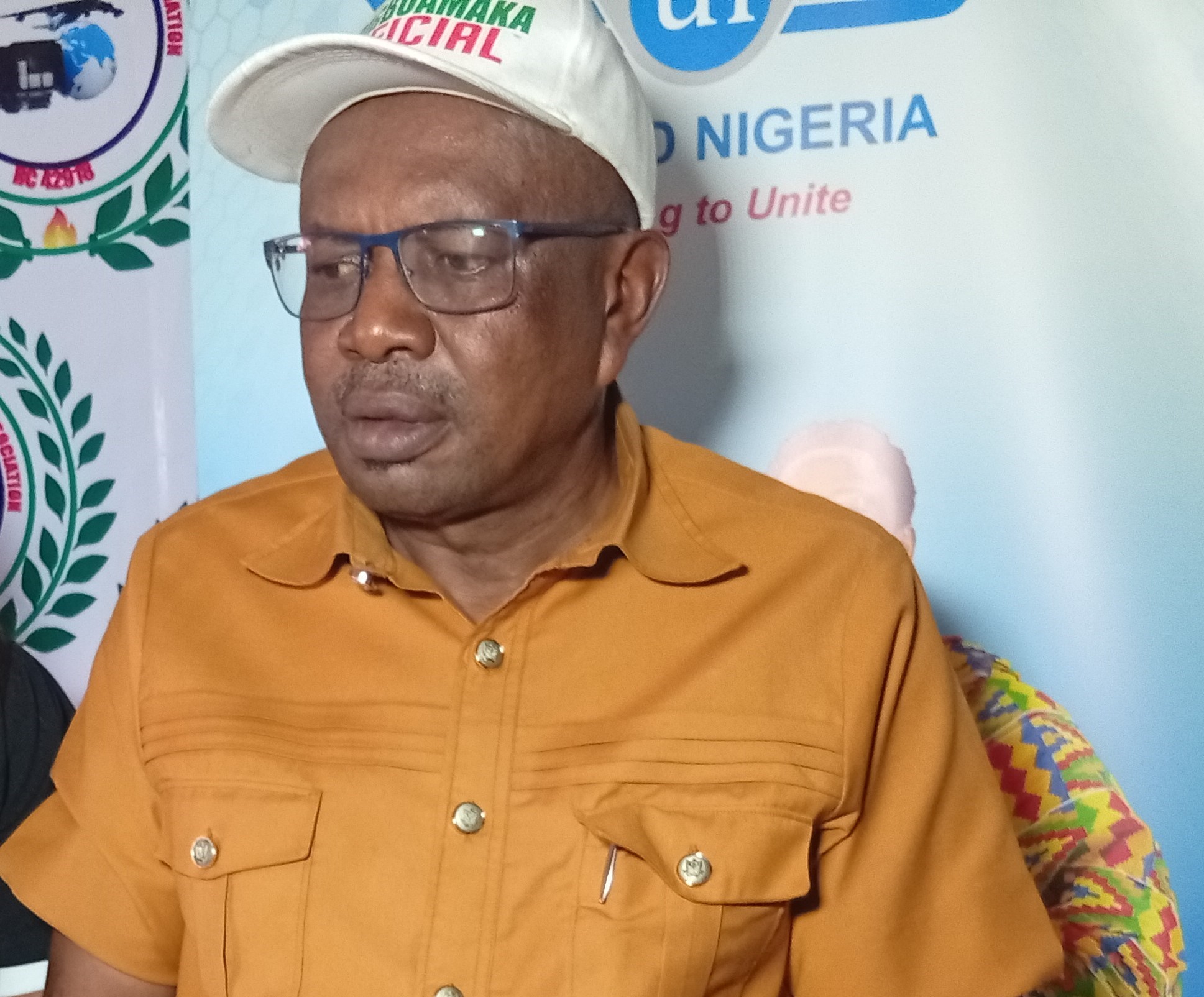
By Ranmilowo Ojalumo -The President of Ndigboamaka Progressive Market Associations, Comrade Chinedu Ukatu, has called on the Federal and state governments to urgently address insecurity, multiple taxation, high energy costs, exchange-rate volatility and declining purchasing power threatening the survival of Nigerian traders.
Comrade Ukatu made the call on Monday, September 28, 2026, at a press briefing at the association’s secretariat, where he spoke on the state of the nation and its impact on the Nigerian trading community.
The association, which represents more than 58 major markets and millions of traders in Lagos State, said the challenges confronting businesses had reached a critical point, stressing that traders needed a stable and predictable environment to operate.
The association president said the association remained non-partisan and would only support political parties and candidates prepared to protect the interests of the trading community. “As traders, we desire only one thing: stability. Business thrives where there is peace and predictability,” he said.
While commending the Federal Government for its efforts to improve national security, comrade Ukatu said insecurity along major highways had become an additional cost for traders moving goods across the country. He identified the Lagos-Onitsha, Lagos-Kano and Lagos-Port Harcourt routes among the major trade corridors where insecurity was affecting the movement of goods.
“We must state clearly that insecurity on our highways has become a direct tax on trading. Our members pay heavily to move goods. Trucks are delayed, goods are lost and drivers are attacked,” he said.
According to him, the government must intensify security along major trade routes because traders were primarily concerned about the safety of their goods and businesses rather than partisan politics.
“The trader is not a politician; he is not interested in Party A or Party B. He is interested in whether his goods will get to the market safely,” Ukatu said.
He also condemned what he described as multiple taxation and harassment of traders by state and non-state actors, claiming that a single container in Lagos could be subjected to more than 15 different levies between the port and the trader’s shop.
The president described the situation as economically unsustainable and urged the Federal and state governments to establish a joint task force to address multiple taxation at ports and along major roads.
On the economy, the market association president said Nigerian traders were facing a combination of high exchange rates, rising energy costs and weak consumer purchasing power. “The Nigerian trader is resilient, but resilience has a limit,” he said.
Comrade Ukatu said the heavy dependence of Nigerian markets on imported goods had made traders particularly vulnerable to fluctuations in the naira-dollar exchange rate. He claimed that more than 70 per cent of goods in the markets were import-dependent, making it difficult for traders to accurately plan the cost of importing and clearing their goods.
“A trader who orders goods today cannot predict the cost of clearing it tomorrow,” he said, urging the Central Bank of Nigeria to establish a special stability window for genuine importers of essential commodities and raw materials.
The association also expressed concern over the rising cost of electricity and other forms of energy, saying traders were increasingly relying on diesel and generators to operate their businesses. “We run our markets on diesel and generators. The cost of power is now higher than the rent of our shops,” Ukatu said.
He called on the Federal Government to accelerate special power projects for markets and industrial clusters, arguing that reliable electricity would reduce the cost of doing business and improve the competitiveness of Nigerian traders.
On inflation, the president said declining purchasing power was affecting both traders and consumers, noting that many families were cutting down on their spending. “Our customers are buying less. Families are cutting down on everything. When the buyer has no money, the seller cannot sell,” he said.
He therefore expressed support for policies aimed at reducing food inflation and restoring purchasing power among Nigerians.
While addressing the controversy surrounding the participation of Chinese citizens and other foreigners in Nigeria’s retail markets, Ukatu said the association had not mobilised traders to protest against foreigners.
“Let me clarify this issue. We did not ask nor mobilize any trader to protest against Chinese citizens or any other foreigners in Nigeria. Nigeria is a hospitable nation,” he said. However, he said the association was demanding stronger enforcement of Nigeria’s indigenous trade policies, particularly with respect to retail trade.
Ukatu argued that the association was seeking the same protections available to traders in other countries, saying foreign investors should not move from wholesale and manufacturing activities directly into retail markets in competition with Nigerian traders.
“We are not asking for xenophobia; we are asking for reciprocity and protection as provided in other climes,” he said. He called on the National Assembly and Federal Government to revisit and strengthen laws governing local content and retail trade, with a view to protecting Nigerian traders.
While disclosing the association’s demand, Ukatu said the association would engage political parties and candidates on the basis of their willingness to address the concerns of millions of Nigerian traders. Among its demands are the establishment of a joint Federal and state task force to tackle multiple taxation at ports and on major roads; improved security along major trade routes, particularly the Lagos-Benin-Onitsha corridor; and the provision of single-digit interest-rate loans to market traders through the Bank of Industry and other development finance institutions.
The association also demanded the inclusion of market leaders in the formulation of trade and fiscal policies, arguing that traders should be involved in decisions directly affecting their businesses. “You cannot make policy for traders without traders,” Ukatu said.
The association further called for the enactment and enforcement of a clear Retail Trade Protection Law to regulate foreign participation in Nigeria’s retail sector. Despite the challenges, Ukatu said Ndigboamaka Progressive Markets Association remained committed to Nigeria and its economic development.
“Ndigboamaka Progressive Markets Association believes in Nigeria. We believe in the enterprise and industry of the Nigerian people. The 58 markets of Lagos are the engine of Nigeria’s economy, and we will continue to support any government that supports enterprise, unity and progress”, the president said, adding that the association was ready to partner with the Federal Government, Lagos State Government and the private sector to build a stronger economy.