

West Africa’s Real Estate Evolution: Local Giants, Smart Designs, and a Sustainable Future

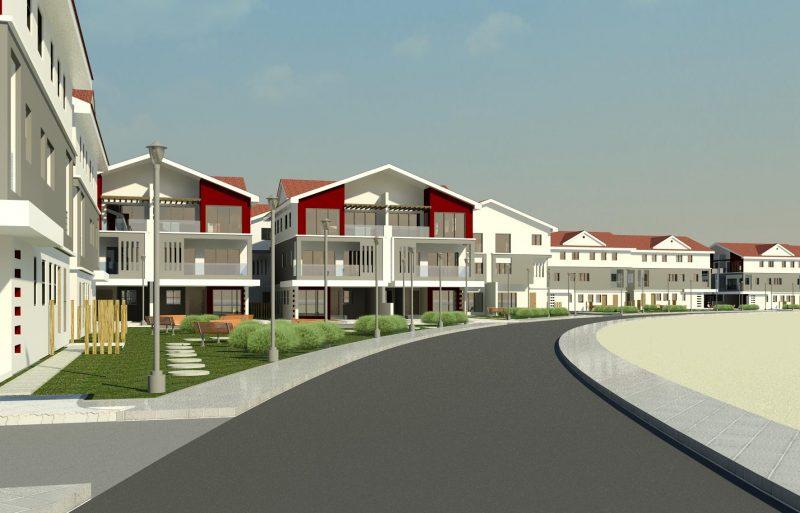
By Ifeanyi Okafor – As the skylines of West Africa expand with modern residential estates, smart commercial hubs, and purpose-built mixed-use developments, one truth is becoming evident: Africa’s real estate future is increasingly being driven from within.
Traditionally reliant on foreign contractors and multinational developers, the region has witnessed a dramatic shift as local firms rise to prominence, offering solutions that are not only technically sound but also socially and environmentally responsive.
In Nigeria, Ghana, Côte d’Ivoire, and Senegal, homegrown firms are stepping forward, matching global standards and redefining the landscape of African real estate. From Lagos to Accra, new projects are springing up that combine design excellence, financial accessibility, and sustainability—all delivered by indigenous expertise.
One such firm is Comfort Architectural Finishing Limited (CAF Ltd), which has earned recognition among the Top 100 Fastest Growing SMEs in Nigeria, clinched the Real Estate Innovation Award from The Entrepreneur Africa, and was named a Top 100 Architectural Firm by the Nigerian Institute of Architects. With several public sector contracts under its belt and commendations from public officials, CAF Ltd is building a legacy in delivering sustainable, scalable infrastructure.
But CAF Ltd is not alone.
In Ghana, Devtraco Plus continues to redefine luxury and middle-income housing with modern designs tailored for Accra’s growing professional class. Their developments blend aesthetics with functionality, and their presence in urban redevelopment zones is raising the bar for what’s possible with local talent.
LandWey Investment Ltd, based in Lagos, Nigeria, has also made waves with its aggressive real estate marketing, smart city concepts, and gated community developments in Lekki and its environs. Their model—offering flexible payment plans and community infrastructure—has helped thousands of first-time buyers into property ownership.
Meanwhile, Rendeavour, Africa’s largest urban land developer, though multinational in footprint, has significantly localized its approach. Its Appolonia City project in Ghana and Alaro City in Nigeria (a joint venture with the Lagos State Government) showcase how large-scale developments can be tailored to fit local planning needs, drive job creation, and integrate industrial, residential, and commercial uses in one ecosystem.
According to industry analysts, the rise of these firms signals a broader tectonic shift in trust and capacity. “The dominance of foreign developers is being seriously challenged,” notes Damilola Adeyemi, a real estate consultant in Abuja. “Today, local firms have mastered the complexities of construction, regulation, and community engagement. Many are even leading in green innovation.”
From energy-efficient estates to smart housing and faith-based infrastructural projects, developers are increasingly adopting modular designs, passive cooling techniques, and sustainable materials—practices once thought too expensive or impractical for the African market.
Regional cooperation through ECOWAS protocols is also enhancing cross-border investments, with diaspora interest adding further momentum. Investors are now looking beyond the big cities, targeting secondary urban centers in Ibadan, Kumasi, and Dakar for next-gen developments.
As firms like CAF Ltd, Devtraco Plus, LandWey, and Rendeavour continue to shape the sector, the West African real estate industry is gradually becoming self-sufficient, smart, and globally respected.
What was once seen as a fragmented, high-risk market is now being hailed as a dynamic growth frontier, with local champions at the helm of its transformation.