

By Ranmilowo Ojalumo At a time when Nigerians are demanding more accountability, visibility, and measurable outcomes from elected officials, the conversation about the kind of leadership required in the National Assembly, especially at the senate, has become more urgent.
With 109 senators representing over 200 million citizens, the effectiveness of each lawmaker carries significant weight. In this context, the public service record of Orji Uzor Kalu offers a strong argument for why Nigeria needs more legislators who combine political experience, economic understanding, and grassroots engagement with visible results.
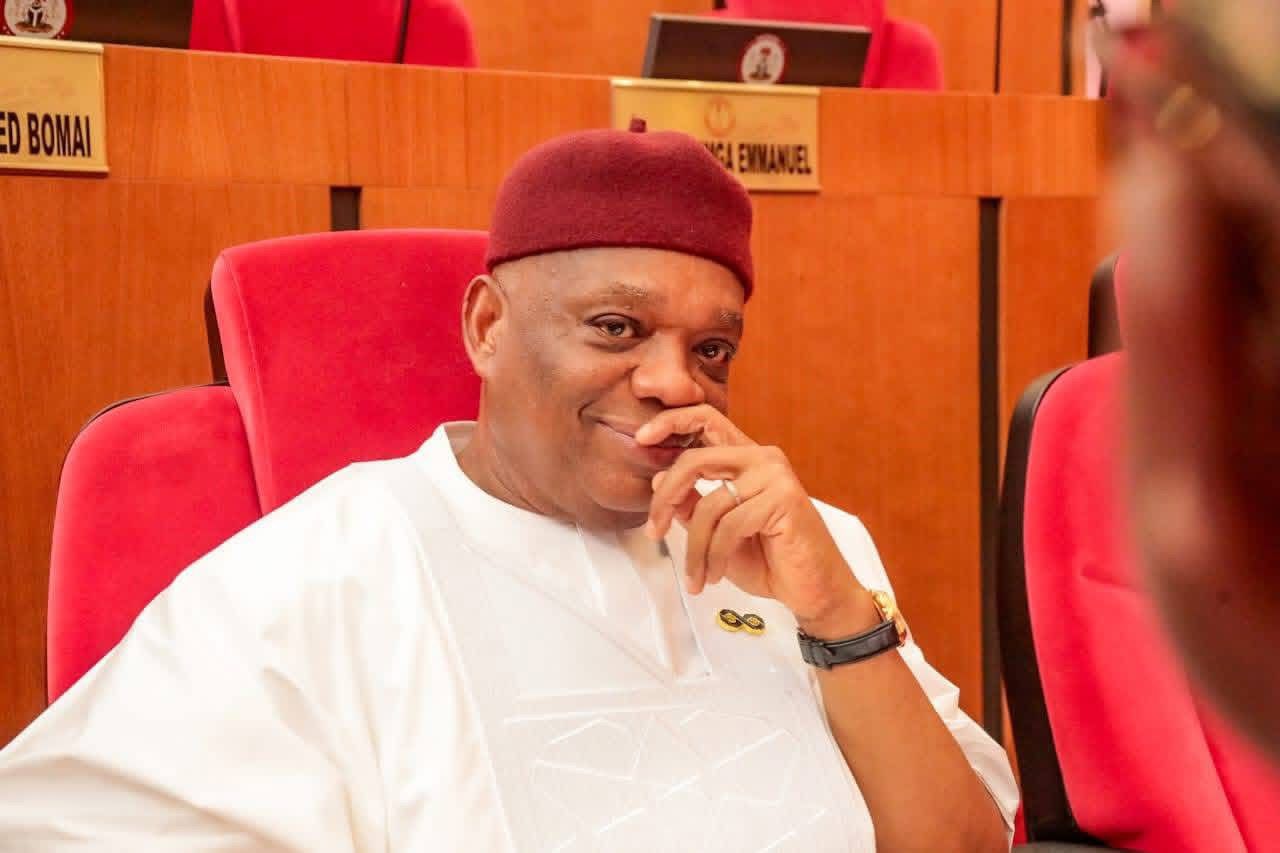
Currently serving as Senator for Abia North under the All Progressives Congress (APC), Kalu remains one of the most prominent voices from the South-East in national politics. In the 10th Senate, he holds the strategic position of Chairman of the Senate Committee on the South East Development Commission (SEDC), a critical body established to address decades of infrastructural neglect and economic challenges in the region. His leadership of this committee places him at the centre of efforts to drive federal interventions in the South-East, particularly in areas such as road infrastructure, erosion control, industrial revitalisation, and youth empowerment.
Beyond committee leadership, Kalu has continued to demonstrate legislative relevance through active participation in debates, motions, and national policy discussions. His experience as former Chief Whip in the 9th Senate provided him with the institutional knowledge required to navigate legislative processes effectively.
In the current Senate, he has been involved in oversight functions that ensure Ministries, Departments, and Agencies (MDAs) are held accountable for budget implementation and project delivery. Oversight remains one of the most critical, yet underappreciated responsibilities of lawmakers, and Kalu’s engagement in this area reflects a commitment to ensuring that appropriated funds translate into tangible development outcomes.
His contributions are particularly significant in a country where gaps between budget approvals and actual project execution remain wide. Through committee work and legislative scrutiny, Kalu has been part of efforts to track federal spending and push for improved performance from government agencies. This aligns with broader concerns raised by the National Assembly of Nigeria regarding the need for stricter compliance with budgetary provisions and more transparent governance.
At the constituency level, Kalu’s record continues to provide concrete evidence of impact. Since his election to the Senate in 2019, he has facilitated the construction and rehabilitation of over 70 rural roads across Abia North, spanning communities in Bende, Ohafia, Arochukwu, Isiukwuato, and Umunneochi. These projects, though often modest in scale, have improved access to markets, reduced transportation costs, and enhanced economic activity in rural areas. Infrastructure at this level plays a crucial role in local development, especially in regions where federal presence has historically been limited.
In education, Kalu has supported the distribution of more than 20,000 learning materials and the renovation of several schools, while also funding scholarships for hundreds of students from disadvantaged backgrounds. These interventions address systemic gaps in Nigeria’s education sector, where millions of children still face barriers to quality learning. According to the National Bureau of Statistics, poverty remains a major factor limiting access to education, making such targeted efforts essential.
Healthcare interventions have also formed part of his legislative outreach. Through medical missions and support for primary healthcare centres, thousands of constituents have benefited from free consultations, treatments, and essential drugs. In rural communities where access to healthcare services is limited, these programmes provide immediate relief and improve overall well-being.
Kalu’s empowerment initiatives further underscore his grassroots connection. With over 5,000 items, including tricycles, motorcycles, sewing machines, and grinding machines distributed to constituents, alongside financial grants, Kalu has contributed to small-scale economic growth within his district. While empowerment programmes are sometimes criticised, their direct impact on livelihoods in a country with high unemployment and underemployment cannot be ignored.
What distinguishes Kalu, however, is not just his constituency projects, but the breadth of his influence within national politics. As a key leader of the APC, he has been entrusted with significant party responsibilities, including his appointment by Bola Ahmed Tinubu to coordinate party activities in Abia State ahead of the 2027 general elections. This role reflects both political trust and strategic importance, positioning him as a central figure in the party’s efforts to expand its footprint in the South-East.
His political relevance is further reinforced by his background in business. Before entering politics, Kalu built Slok Holding into a multinational enterprise with operations across several African countries. This private sector experience informs his approach to governance, particularly his advocacy for policies that support local industries and economic diversification. In a country where manufacturing contributes less than 10 percent to GDP, such perspectives are vital for shaping policies that can drive sustainable growth.
The case for more senators like Orji Uzor Kalu ultimately rests on the need for a legislature that delivers. Nigeria requires lawmakers who understand governance beyond theory, who engage actively in oversight, and who translate public office into tangible benefits for their constituents. It needs legislators who can influence policy at the national level while remaining connected to the grassroots realities of their people.
As Nigeria continues to confront complex challenges from economic instability to infrastructural deficits, the role of the Senate will remain central to shaping the country’s future. Strengthening that institution requires individuals who are not only experienced but also proactive, visible, and results-oriented. In this regard, the record of Orji Uzor Kalu provides a compelling template. His blend of legislative activity, constituency impact, and political leadership illustrates the kind of representation that can help move Nigeria closer to the promise of effective and responsive governance.