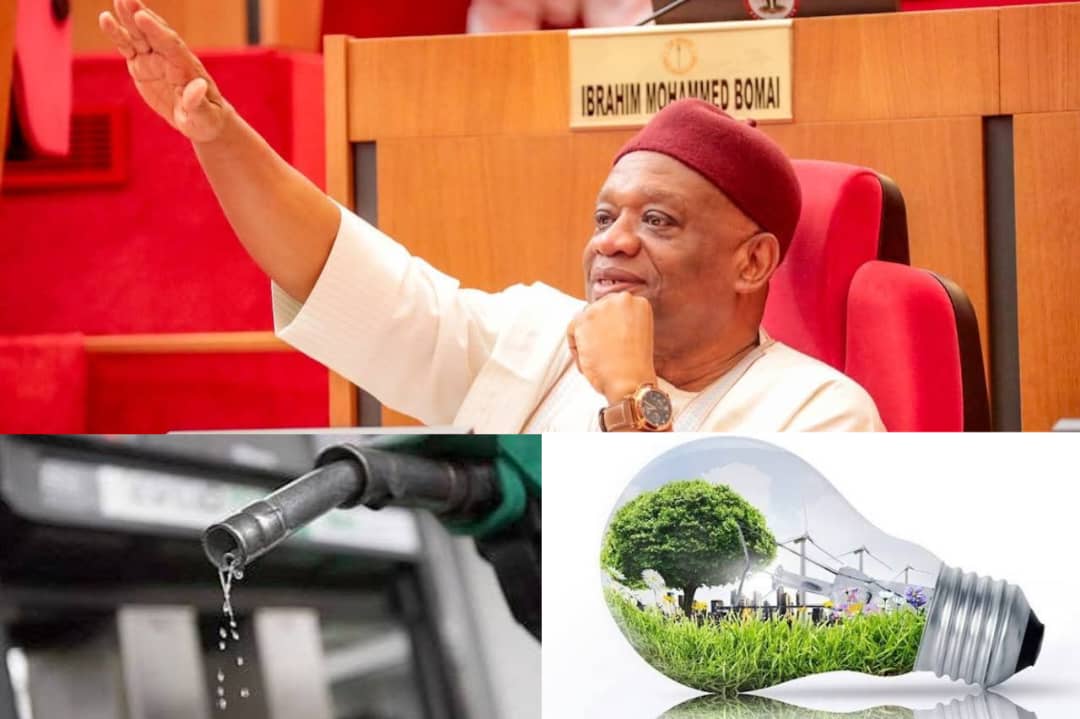

Imperative of Nigeria, African Nations Cueing Behind United Nations Policy on Climate Change


By Prince Olalekan Olagunju
By definition, climate simply means in meteorology, a typical weather in a region, that is, average weather or the regular variations in weather in a region over a period of years. In other words, climate is relative to particular weather or a place with a constant type of weather. It may be an equatorial, monsoon, warm, cold, temperate, tundra (northern hemisphere only) climate etc.
Before a particular climate is pronounced or attributed to a place or region, weather condition in that location must have been studied for thirty five years. Hence, the reason climate changes in every thirty five years.
In retrospect, according to the United Nations’ World Meteorological Organization (WMO), monitoring global weather record, said the first quarter of 2014 witnessed an abnormal number of extremes of heat, cold and rain across the world at the same time causing enormous disruptions to transport, power systems and food production. Indeed, from the current climate trend across the globe, it is obvious that the world is witnessing a drastic change in weather condition.
There had been heat-waves in Slovenia and Australia, snow in Vietnam and the return of the polar vortex to North America. Britain has equally had its wettest winter in 250 years while temperatures in parts of Russia and the Arctic have been 10C above normal. Meanwhile, the southern hemisphere has had the warmest start to a year ever recorded, with millions of people sweltering in Brazilian and southern African cities. Both equatorial and polar regions have experienced extreme weather condition in year 2015.
In the southern hemisphere, Australia, Argentina and Brazil have experienced extended heat-waves. Likewise, the unusually cold weather in the eastern United States coincided with severe storms in Europe. Almost a decade, the global climatic conditions have not been friendly which call for concerted efforts of all Nations. The theme of 2024 World Meteorological Day is “At the Frontline of Climate Action”. Currently, climate change is real and undeniable or glaring threat to entire world community. The effects are already visible and are catastrophic, calling for expedite action now.
Causes of Climate Change have been identified to include combination of natural processes and human activities. Understanding these causes is crucial for developing targeted mitigation and adaptation strategies. Natural causes are volcanic eruptions. These release large quantities of ash and gases, such as sulfur dioxide, into the atmosphere, which can temporarily cool the Earth by blocking sunlight. Solar variability, i.e. changes in the sun energy output can influence Earth climate over long timescales.
Others causes of Climate Change are human-induced causes, such as Greenhouse Gas Emissions, burning of fossil fuels (coal, oil, and natural gas) for energy and transportation releases significant amounts of carbon dioxide (CO2), methane (CH4), and other greenhouse gases (GHGs) into the atmosphere. These gases trap heat, leading to a warming effect known as the greenhouse effect. Deforestation and Land Use Changes – Clearing forests for agriculture or urban development reduces the number of trees that can absorb CO2, exacerbating atmospheric CO2 levels etc.
At present, Nigeria is already witnessing an unusual intense rainfall across the country with grievous consequences on socio-economic activities, lives and properties. In Lagos, for instance, people always experience rainfall mostly every year. According to reports from the Nigerian Meteorological Agency, NIMET, Lagos usually record large amount of rainfall and other coastal States and cities. Strong winds, lighting and thunderstorms may be regular phenomenon during the start and close of rainfall based on predictions or occur in stronger magnitude during year raining period.
As a case study, States in the northern part of Nigeria are experiencing unusual rainfall, for instance, some parts of Maiduguri in Bornu are flooded due to unexpected rains. Jigawa, Benue, Kebbi, Niger, Taraba, Sokoto, Adamawa, Kaduna, Kogi and States on Nigeria coastal line (Bayelsa, Rivers) have been identified as flood prone states; let alone Lagos State which is below the sea level.
Seeing climate change as a global phenomenon, efforts to control global warming should be addressed in the forthcoming United Nation Development Summit holding in Baku, Azerbaijan from 11th to 22nd November, 2024. The Parties and Observer States to the United Nations Framework on Climate Change should prevail on Nations across the globe to comply with Climate Change Protocols with absolute commitment, transparency and accountability.
Response to the challenge of controlling global warming will require fundamental changes in energy production, transportation, industry, government policies, and development strategies around the world. Imbibing these changes may take time. The challenge today is managing the impacts that cannot be avoided while taking holistic measures to prevent more severe impacts in the future. In order to forestall avoidable danger to human lives and property, people living along flood prone areas and the lagoon should relocate as soon as the need arises.
The danger of flooding is so grievous that everyone, especially those living in susceptible locations, must take necessary precautions before it is too late. According to experts, flooding can cause a range of health hazards and risks, including death and injury, unhygienic drinking water, harmful material spills, increased populations of disease-carrying insects and rodents, mouldy houses, and community disruption and displacement.
As rains become heavier, streams, rivers, and lakes can overflow, increasing the risk of water- borne pathogens. As a result, Nigerians should ensure that they stop all practices that could put a clog in the wheel of governments efforts aimed at tackling flooding.
People must be ready to cooperate with the states and federal governments by manifesting positive attitude in their response to the environment. These include proper waste disposal, compliance with building regulations, embracing alternative energy use, paying necessary attention to sanitation issues, not building structures on drainage channels, flood plains and on water pathways. In general, they must desist from all activities that could compromise the huge investment government at all levels have committed to environmental regeneration; while government should be proactive without delay.
As a natural phenomenon, man is yet to discover scientific mechanism that is capable of stopping rains. However, it is still within the capacity of man to mitigate some of the adverse effects of rainfall. It is in view of this that relevant stakeholders and, indeed, all people need to collaborate with the governments at various levels; and Safety, Health and Environmental Agencies; the United Nations in order to ensure that rains are for our benefits. Together, we can mitigate the effects of climate change globally.
Olalekan Olagunju writes from Crawford University, Igbesa, Ogun State, Western Nigeria. Email: princesadeolas@gmail.com