
The Historical Significance of Mmam Bridge: Why Orji Kalu’s Support for the Motion Matters to Isuochi

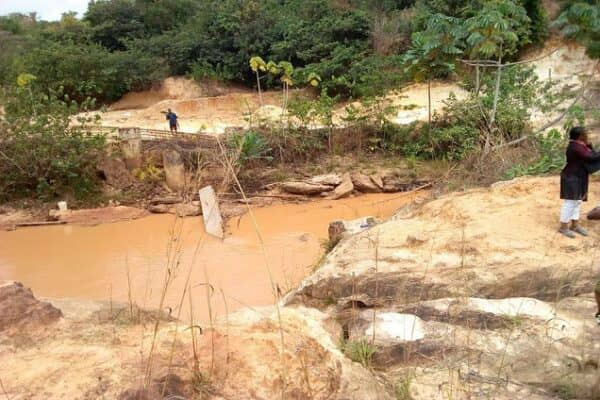
By _By C. I. Duke., Umunneochi Abia. -For many people outside Umunneochi, the Mmam Bridge (Mbala Isuochi-Enugu border bridge) is just a broken structure on a map. For us in Isuochi, it is a story of lost connection. Built in 1955 by Shell-BP, the bridge was a gateway linking ancient city to Achi, Inyi and Awlaw in Oji River Local Government Area of Enugu State, as well as parts of Anambra State. Traders moved through it, farmers carried their produce across it, and families visited relatives on the other side. It was the artery that kept our communities alive economically and socially.
Then came the civil war. On 15 September 1968, federal troops bombed and destroyed the bridge in attempt to cut off movement toward Okigwe. Whatever the military logic of that time, the consequences fell on ordinary people in Mbala and the surrounding communities. They have carried its burden for more than half a century.
Over fifty years of neglect followed. The bridge remained a collapsed ruin while Isuochi’s cashew farms, including the well-known Mbala Cashew Plantation, struggled to reach markets efficiently. Ties with neighbouring Enugu communities weakened. Young people grew up hearing about the bridge from their parents rather than seeing it in use. Local appeals were made over the years, and all of them went unanswered.
Economic isolation is the quiet cost of that neglect. Farmers have had to take longer and costlier routes to get their produce to buyers. Traders have lost customers. Transport fares rise, and perishable goods spoil before they reach the market. When a community is cut off like this, its young people look for opportunities elsewhere and its good farmland stays underused. I say this as someone who has seen how one broken link can slow an entire people.
Now to the Senate. In October 2026, the Senate, following a motion sponsored by Senator Osita Ngwu, called on the Federal Government for urgent intervention and reconstruction of the Nkwuni-Awlaw Mmam Bridge linking Enugu and Abia States. Senator Orji Uzor Kalu lent his voice to the motion during plenary, supporting all its prayers and calling on the Federal Government to intervene for the people of our communities, particularly the farmers and traders whose livelihoods can be improved by fixing the route.
What stands out to me is the manner of his support. Politics in Nigeria often comes with a scramble for credit: who raised the motion, whose name goes on the document, whose face appears in the newspapers. Senator Kalu did not need to be the one moving the motion. When Senator Ngwu told him he was raising it, Kalu supported it wholeheartedly. That is the mark of a leader who cares more about the result than the headline, his people’s welfare than personal credit.
His concern for Isuochi is also not a sudden one. Senator Kalu recently toured the city and saw the situation of the bridge for himself. A site visit is different from a briefing. When you stand at the edge of a broken bridge and look at the people who depend on it, the matter stops being a file in a ministry and becomes a personal responsibility. I believe that firsthand view strengthened his conviction, and it is the kind of leadership our communities deserve.
The political importance of rebuilding the bridge is clear. It would reconnect communities in Abia and Enugu States, strengthen working relationships at grassroots level, and show that the Federal Government is committed to the South East, a region many people feel has been left behind in infrastructure. Matters like this, handled well, build trust between communities across state lines and reduce the sense that border areas are forgotten.
Historically, the bridge is part of our shared memory of the civil war and of the years when Mbala was a busy crossing point for commerce and family life. Restoring it would mean more than concrete and steel. It would be an acknowledgement that the suffering of the 1960s and the neglect that followed should not define the future of our people.
Reconstruction would reopen the cashew belt, which is almost forgotten, to wider markets, cut transport costs, protect the incomes of farmers and traders, and create possible opportunities to attract private investment into agro-processing. Once traffic flows freely again, small businesses along the route, from food sellers to transporters, begin to grow. Young people find work in construction and trading, and families regain the income they have been missing for generations. Those are real gains, not abstract promises.
For these reasons, I join Senator Kalu in calling on the Federal Government to act quickly. Approve the funds, award to competent contractors, set a clear timeline and publish progress reports so that the people can see work happening on the ground. Our communities have been patient for over fifty years. Patience, however, is not the same as silence, and we will keep speaking until the bridge stands again.
I am proud that our senator used his voice for Isuochi without making the matter about himself. Let us support that spirit.
_Comrade Duke writes from Isuochi in Abia North._